0-60 mph: The Acceleration Test
0-60 mph acceleration is one of the most quoted performance figures for hypercars, but there’s more to this statistic than a simple time. Let’s explore what acceleration really means and how it’s achieved.
How Acceleration Is Measured
Official 0-60 mph times come from controlled testing environments:
Testing Conditions
Manufacturers and automotive journalists test acceleration in optimal conditions:
- Prepared surface (often a drag strip or private test track)
- Professional drivers with launch control experience
- Multiple runs to achieve the best time
- GPS-verified timing equipment
- Optimal tyre temperature and pressure
Launch Control Systems
Modern hypercars use sophisticated launch control systems that:
- Manage wheelspin for optimal traction
- Control clutch engagement (or torque delivery in EVs)
- Adjust suspension settings for weight transfer
- Optimise power delivery in the first few metres
Real-World Limitations
The times listed in Tier Cards are often optimal figures that require:
- Specific road surface conditions
- Tyre warming procedures
- Launch control activation
- Driver skill and technique
What Limits Acceleration?
Several factors prevent cars from accelerating even faster:
Traction
No matter how much power an engine produces, it’s useless if the tyres can’t grip the road. This is why:
- Four-wheel drive systems dominate the quickest 0-60 times
- Tyre technology is critical to acceleration performance
- Weight distribution affects how much grip the driven wheels have
Power-to-Weight Ratio
Acceleration is fundamentally about power relative to mass. A lighter car with less power can often out-accelerate a heavier car with more power.
Aerodynamics
At low speeds, aerodynamic drag is minimal, but as speed builds, air resistance increases exponentially, requiring ever more power to continue accelerating.
Why Acceleration Matters
While top speed grabs headlines, acceleration is arguably more relevant to real-world driving:
Everyday Performance
Acceleration from 0-60 mph happens entirely within legal speed limits (in most countries). It’s a performance metric you can actually experience on public roads — safely and legally.
Engineering Excellence
Quick acceleration requires excellence in:
- Engine or motor power delivery
- Transmission efficiency
- Weight management
- Traction control systems
The Complete Package
A car with exceptional 0-60 time demonstrates sophisticated engineering throughout: powerful engine, clever electronics, advanced materials and brilliant chassis dynamics.
Notable Acceleration Achievements
In the Cars 2026 deck, you’ll find remarkable figures:
- Electric Hypercars: Often dominate 0-60 times thanks to instant torque delivery
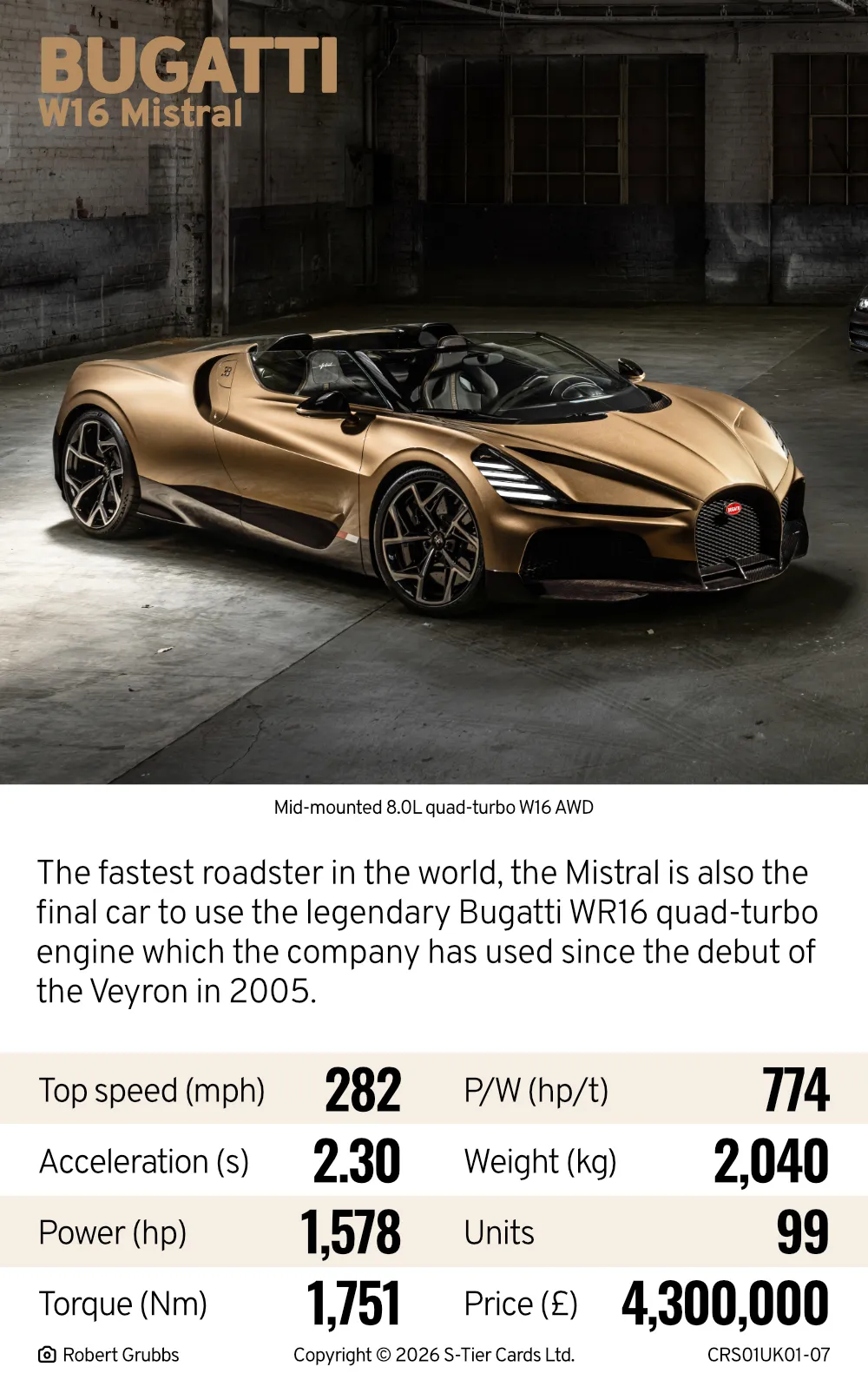
- Bugatti: The W16 engine combined with all-wheel drive delivers devastating acceleration
- Lightweight Specialists: Cars like the Ariel Atom prove that power-to-weight ratio is king
Each represents a different philosophy: raw power, electric torque or lightweight agility.
Beyond the Numbers
When comparing acceleration times in Tier Cards, remember that the difference between 2.5 seconds and 2.8 seconds is enormous. Every tenth of a second shaved off requires significant engineering effort and often represents breakthrough technology.
The true achievement isn’t just the time itself — it’s building a car that can deliver that acceleration reliably, safely and repeatedly.