Torque: The Force Behind Acceleration
If power is the headline figure, torque is the secret weapon. Understanding torque is key to understanding how a car actually feels to drive.
What Is Torque?
Torque is rotational force — the twisting force that the engine applies to the wheels. It’s what you feel pushing you back in your seat when you accelerate.
The Technical Definition
Measured in pound-feet (lb-ft) or Newton-metres (Nm), torque represents:
- The force applied to a lever arm
- In engines: the rotational force at the crankshaft
- What actually moves the car forward
Torque vs Power
Power and torque are related but different:
- Torque: The force that accelerates the car
- Power: Torque multiplied by RPM (how quickly the engine can apply that force)
- Formula: Power = (Torque × RPM) ÷ 5,252
Why Torque Matters
Torque is often more important than peak power for how a car feels:
Low-End Response
A car with high torque at low RPM feels responsive and muscular. You get immediate acceleration without needing to rev the engine.
Overtaking Power
In-gear acceleration — the kind you use for overtaking — relies heavily on torque. More torque means faster acceleration without downshifting.
Driveability
High torque across a wide rev range makes a car easier and more satisfying to drive. You’re not constantly hunting for the power band.
Torque Delivery
Different engine types deliver torque differently:
Turbocharged Engines
Modern turbos deliver massive torque from low RPM. Peak torque often arrives at 2,000-3,000 RPM and holds to 5,000+ RPM.
Naturally Aspirated
Traditional NA engines build torque progressively, often peaking higher in the rev range (6,000+ RPM). The delivery is linear and predictable.
Electric Motors
Electric motors produce maximum torque from 0 RPM — instant response with no lag. This is why electric cars feel explosively quick from standstill.
Hybrid Systems
Combine instant electric torque with combustion engine power. The electric motors fill in low-end torque while the engine provides high-RPM power.
What Limits Torque?
Several factors prevent engines from producing unlimited torque:
Component Strength
High torque creates enormous stress on:
- Crankshaft and connecting rods
- Transmission and clutch
- Driveshafts and differential
- Tyres and wheel bearings
Traction
No point in producing more torque than the tyres can transmit to the road. This is why:
- Traction control systems limit torque delivery in low gears
- All-wheel drive systems help manage high torque
- Launch control carefully meters torque to prevent wheelspin
Torque in Hypercars
Hypercars take different approaches to torque:
High Displacement
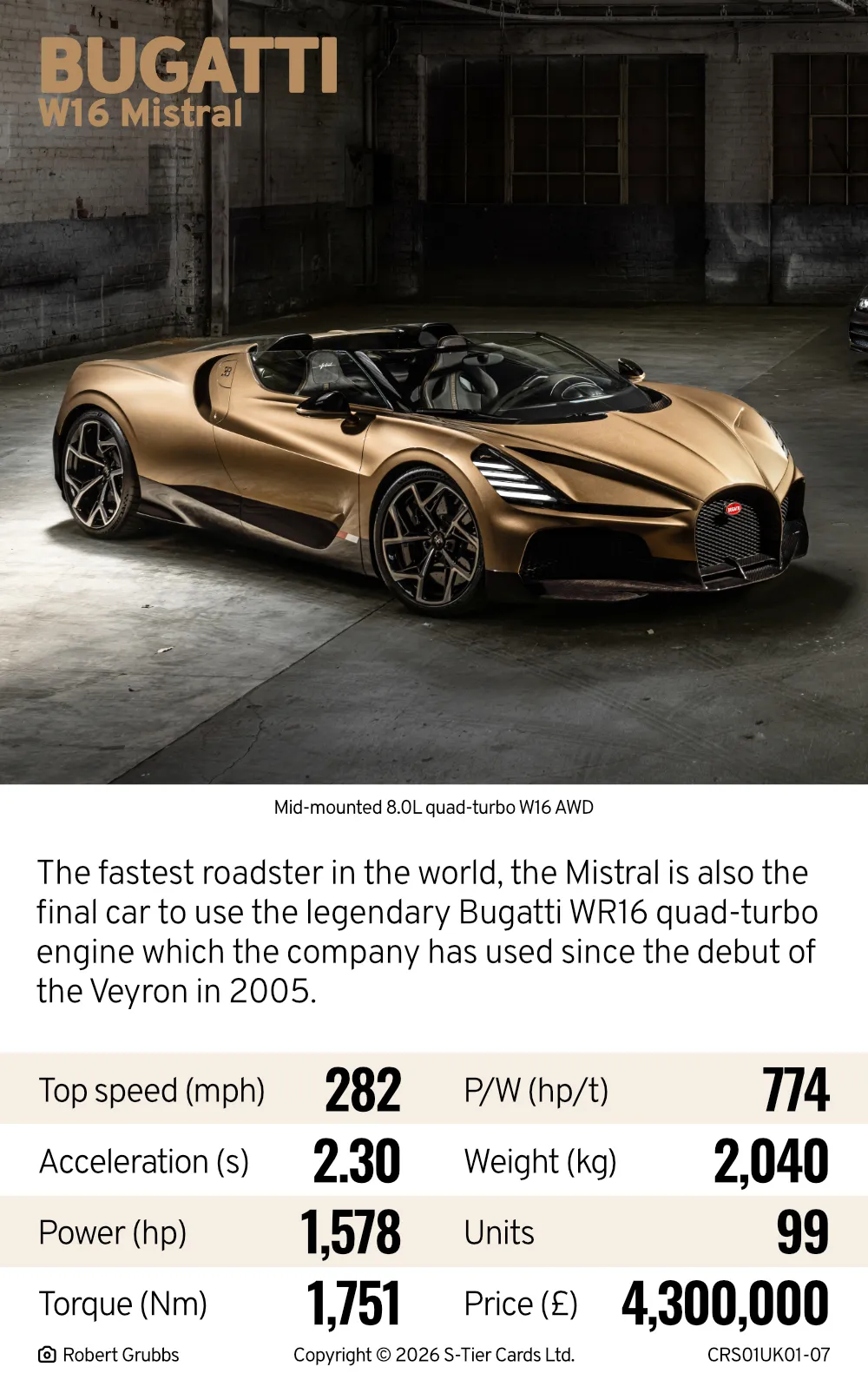
Large engines (6.0L+) naturally produce substantial torque. Bugatti’s 8.0L W16 produces over 1,100 lb-ft.
Forced Induction
Turbochargers dramatically multiply torque. Modern turbocharged V8s routinely exceed 700 lb-ft.
Electric Assistance
Hybrid hypercars use electric motors to provide instant low-end torque, making up for any turbo lag or NA engine lag.
Pure Electric
Electric hypercars like the Rimac Nevera produce over 1,700 lb-ft of torque from standstill — more than most diesel lorries.
Reading the Figures
When comparing torque in Tier Cards:
Peak Torque
The maximum torque figure, typically achieved at a specific RPM. This tells you the engine’s maximum rotational force.
Torque Curve
The shape of torque delivery across the rev range matters more than the peak. A flat, wide torque curve is often preferable to a peaky one.
Where Peak Occurs
Low-RPM peak torque (2,000-4,000 RPM) means strong response and flexibility. High-RPM peak (5,000+ RPM) means you need to rev the engine to access maximum force.
The Complete Picture
Torque and power tell different parts of the performance story:
- Torque determines how the car accelerates in gear
- Power determines ultimate acceleration and top speed
- Both together with weight and gearing determine the complete performance character
The most satisfying hypercars combine high torque with substantial power across a wide rev range.