Top Speed: What It Really Means
Top speed is often the headline figure for hypercars, but there’s more to this statistic than a simple number. Let’s explore what top speed really means and how it’s achieved.
How Top Speed Is Measured
Official top speed figures come from several sources:
Manufacturer Testing
Most hypercars are tested by manufacturers on private tracks or closed roads. These runs are conducted in optimal conditions:
- Calm weather (minimal wind)
- Professional test drivers
- Multiple runs in both directions (to account for wind and slope)
- GPS-verified speed measurement
Independent Verification
Some manufacturers invite independent automotive journalists or organisations like Guinness World Records to verify their claims. This adds credibility to the figures.
Real-World Limitations
The top speeds listed in Tier Cards are often theoretical maximums that require:
- Optimal weather conditions
- Perfect road surface
- Specific tyres rated for extreme speeds
- Sometimes special “top speed” modes that sacrifice other performance aspects
What Limits Top Speed?
Several factors prevent cars from going even faster:
Aerodynamic Drag
Air resistance increases dramatically with speed. At 200+ mph, most of the engine’s power is fighting air resistance rather than accelerating the car.
Power Requirements
Roughly speaking, doubling your speed requires eight times the power. Going from 200mph to 300mph needs dramatically more power than going from 100mph to 200mph.
Tyre Technology
Tyres must withstand enormous forces at extreme speeds. Many hypercars are fitted with special high-speed tyres that are only rated for sustained use at maximum speed for short periods (typically 15-30 minutes).
Mechanical Stress
Every component experiences extreme stress at top speed. Manufacturers must balance ultimate speed with reliability and safety.
Why Top Speed Matters
Top speed is often criticised as irrelevant — after all, where can you legally drive at 261mph? But it matters for several reasons:
Engineering Excellence
Achieving extreme top speeds requires excellence in:
- Aerodynamic design
- Engine and drivetrain engineering
- Thermal management
- Structural integrity
Brand Prestige
Top speed records generate headlines and establish manufacturer reputation. The pursuit of speed drives innovation that benefits all vehicles.
The Complete Package
A car with genuine 250mph capability must excel in numerous areas. High top speed usually indicates sophisticated engineering throughout the vehicle.
Notable Top Speed Achievements
In the Cars 2026 deck, you’ll find remarkable figures:
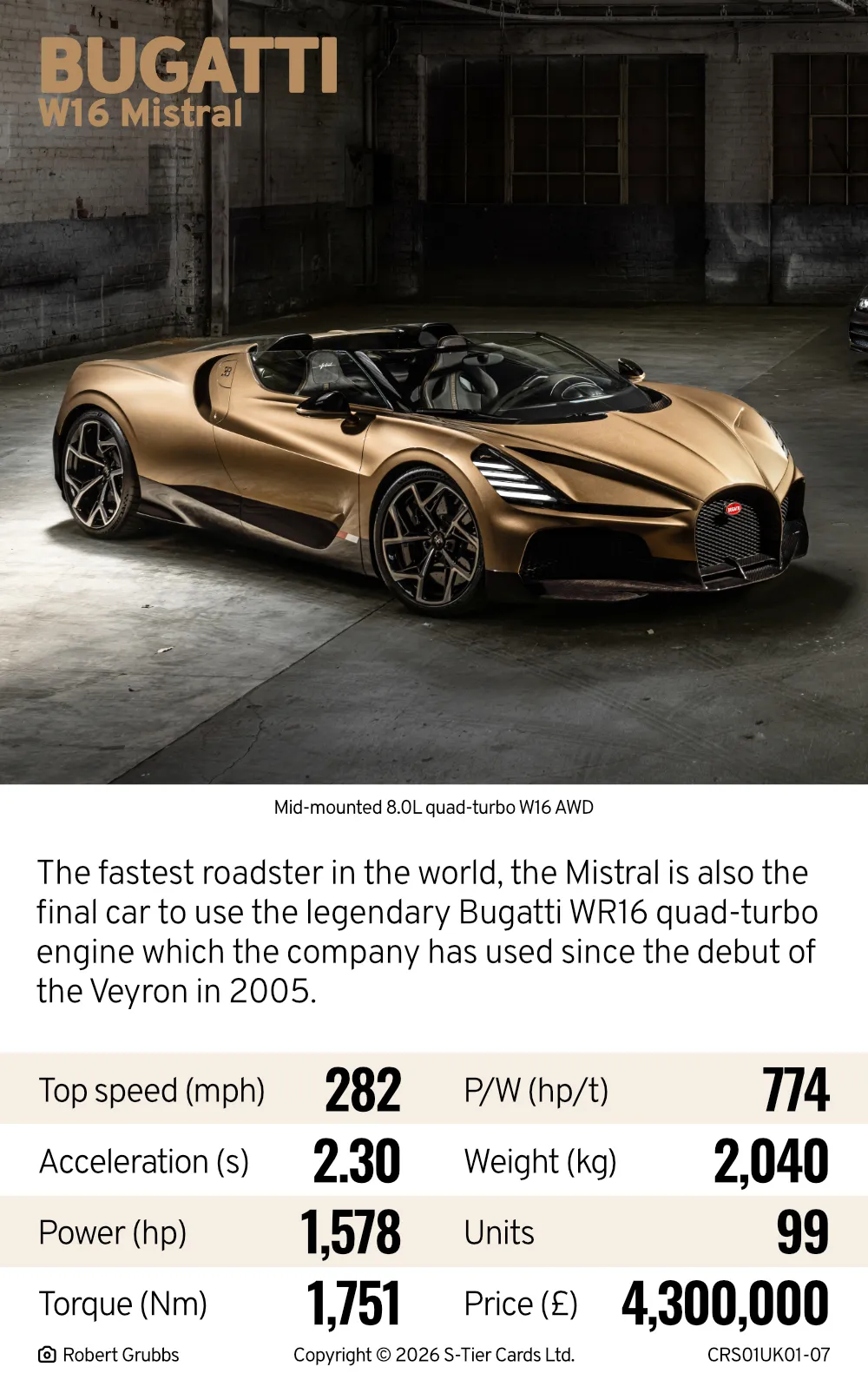
- Bugatti: Multiple models exceeding 260mph, showcasing the W16 engine’s capability
- Koenigsegg: Swedish hypercar maker consistently pushing boundaries with innovative engineering
- Hennessey: American performance specialists achieving extraordinary speeds through power
Each represents a different approach to the same challenge: how fast can a road-legal car go?
Beyond the Numbers
When comparing top speeds in Tier Cards, remember that the difference between 250mph and 260mph represents enormous engineering effort. Every mph gained at these extremes requires dramatically more power, better aerodynamics and more sophisticated technology.
The true achievement isn’t just the speed itself — it’s building a car that can reach that speed reliably, safely and repeatedly.